
Fernando
de Vilallonga
Family roots
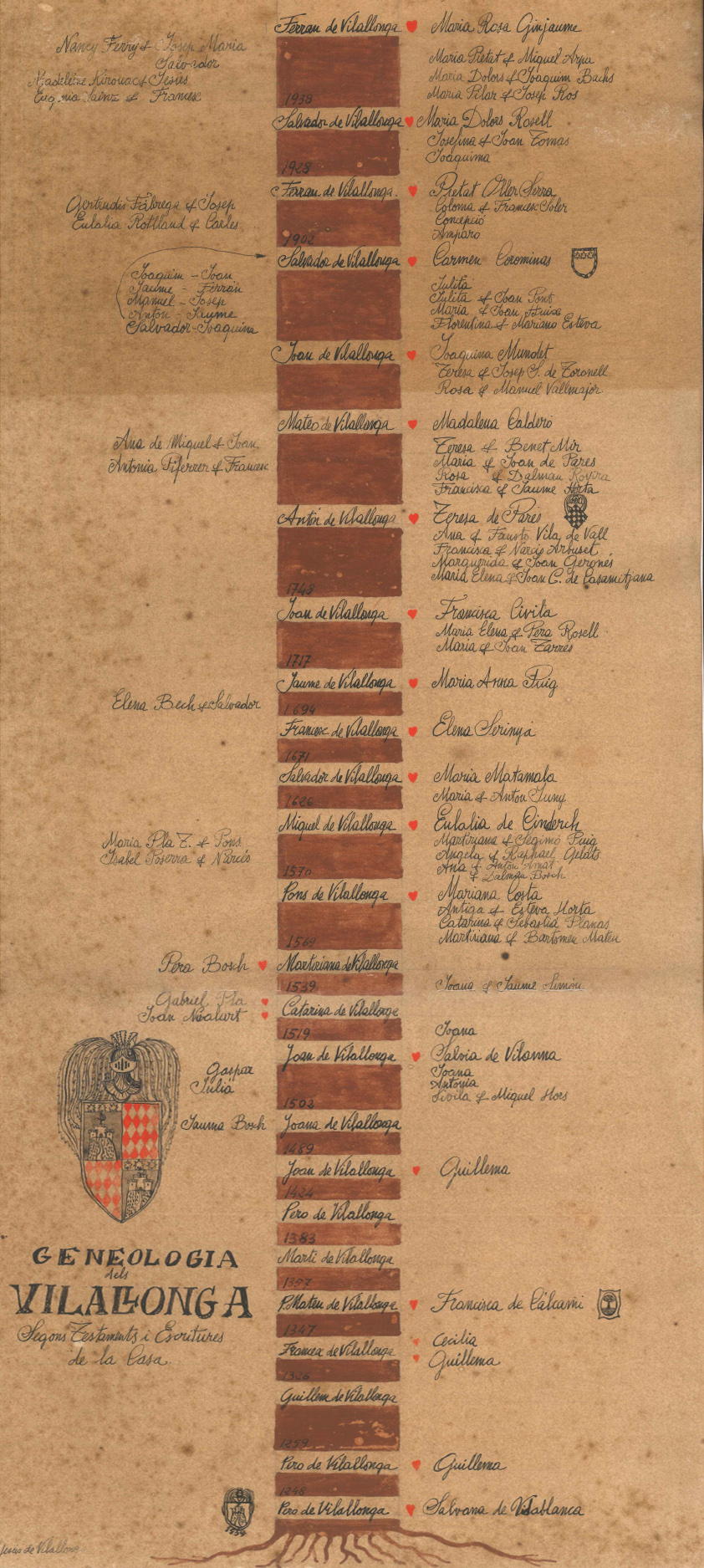
Family tree of the Vilallonga family
The Vilallongas and the stereoscopic photography. 3D before the digital era
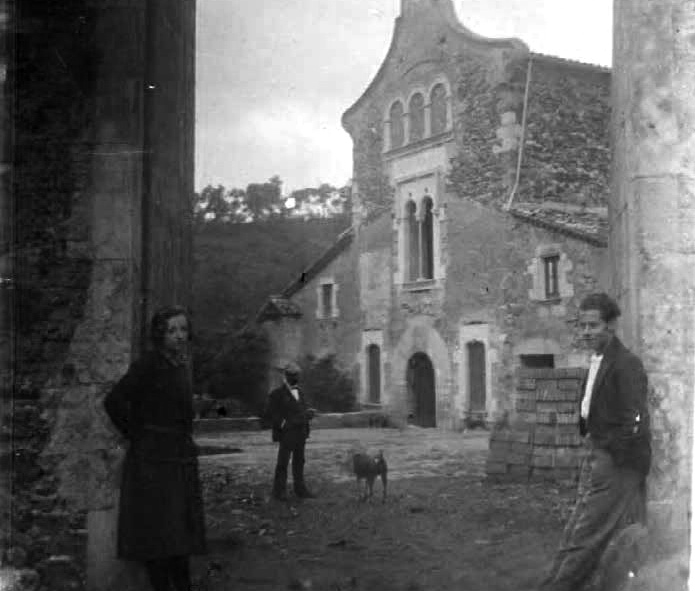
Salvador de Vilallonga i Oller was on trend and bought the first car models and cinema projectors. He got also interested in photography and bought a stereoscopic camera. They were released in the 1850s, ten years after the invention of photography, and became really popular until the 1950s. These devices have two lenses separated at a distance that is similar to the one between our eyes (6.5 cm), which capture a picture at the same time, and a specific device is needed to recreate the feeling of relief. Both Salvador de Vilallonga and his cousin had a stereoscopic camera and took pictures that portray the social life of a landowner family during the first third of the 20th century. Nevertheless, these pictures do not show a neutral perspective, despite the appearance of an objective documentary-like approach, but a reflection of their own vision of the world, their interests and their worries.
A dynasty of rural landowners
No social group can live unconnected to historic changes, every social group has its own history with an origin, a development, a crucial moment and an open ending, and landowners are not an exception. As a social class, they are descendants of feudal peasants of the 13th century, who became landowners during the 16th and 17th centuries and expanded their assets, were granted privileges, titles of nobility and lived off of the income of their properties.
The Vilallonga family, originating from the masos (traditional Catalan country houses) Vilallonga de Vilanna and Parés de Sant Martí Sapresa, are an example of that. The two lineages united in 1748 out of the marriage of the hereu (Catalan traditional name for the eldest son of a family) Antoni Vilallonga and the pubilla (traditional name for the eldest daughter of a family) Teresa Parés, who moved to Mas Parés. The first document that talks about a Parés is dated in 1203, and throughout the years they managed to add more than twenty houses and estates spread around various towns in the regions of La Selva and El Gironès. The term hisendat (the Catalan traditional word for landowners) did not become popular until the late 18th century, and in the 19th century, coinciding with their moving to the cities, this group achieved more power and increased their unity. When they moved to the cities, they left the mas pairal (a Catalan traditional country house) in the hands of masovers (farmers who took care of the house and land), and besides some eventual visits, they only spent some summer days there. In fact, more than a few of the Vilallongas’ pictures were taken in the summer at Mas Parés and its surroundings, in a relaxed and calm atmosphere.
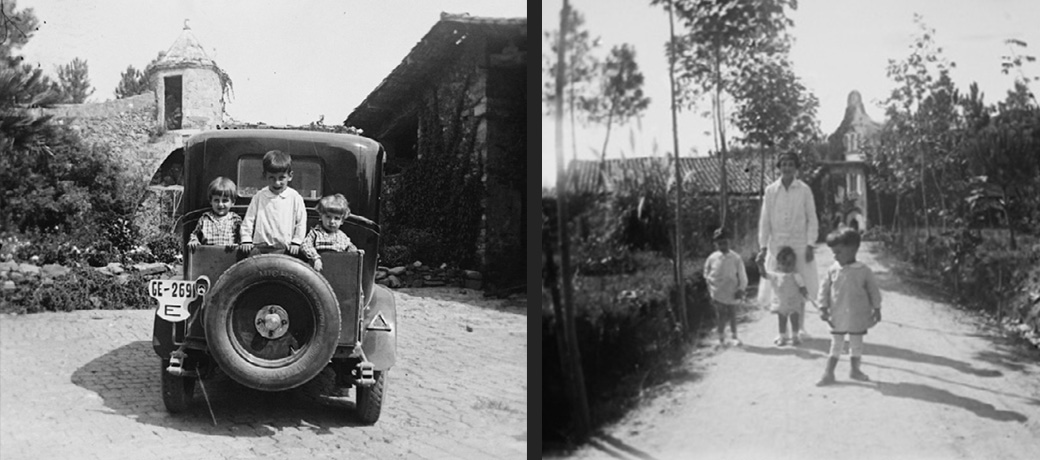
The hisendats, since the last quarter of the 20th century, ceased being the dominant group and some of their assets started disintegrating in a slow but inevitable way, even though they could invest in real estate or be the few who could afford the luxury of having a car.
Santa Coloma de Farners and the hisendats
The climate of insecurity produced by the Carlist wars and the groups of bandolers (Catalan traditional name for bandits), as well as the attraction of the city, are the reasons why many landowners of La Selva who lived in rural houses moved to Santa Coloma de Farners during the first third of the 19th century. The Vilallonga family was one of them. In 1828, Joan de Vilallonga Parés bought a piece of land located in carrer del Prat to build a house. The street had not been so urbanised yet, it ended into the current carrer del Doctor Trueta, and from the house of the Vilallongas they could see a fountain in plaça Farners that was later removed. In this house, four generations of Vilallongas were born, the painter and sculptor Jesús de Vilallonga was one of them, who some years later, as a reminder of the fountain he could see from the house, bequeathed La Colometa, a sculpture which now crowns the small fountain located in plaça Farners. The Vilallongas participated in the social and cultural life of the city. In 1868, Salvador de Vilallonga i Mundet was the vicepresident of the Casino Farnense. Ferran de Vilallonga i Corominas was the founder of the Cercle Cultural Colomenc, an entity that gathered the well-off sectors of the city, and was part of its governing board. His brothers Josep and Carles were also members. As lovers of nature, they were amazed by el Rocar and the surroundings of Farners. They attended religious events and festivities, as in the collection of pictures of the Aplec de Farners in 1905, the oldest found to the date. During the Civil War (1936-1939), the hereu Salvador de Vilallonga i Oller was killed and, when the military conflict ended, the family moved to Girona.
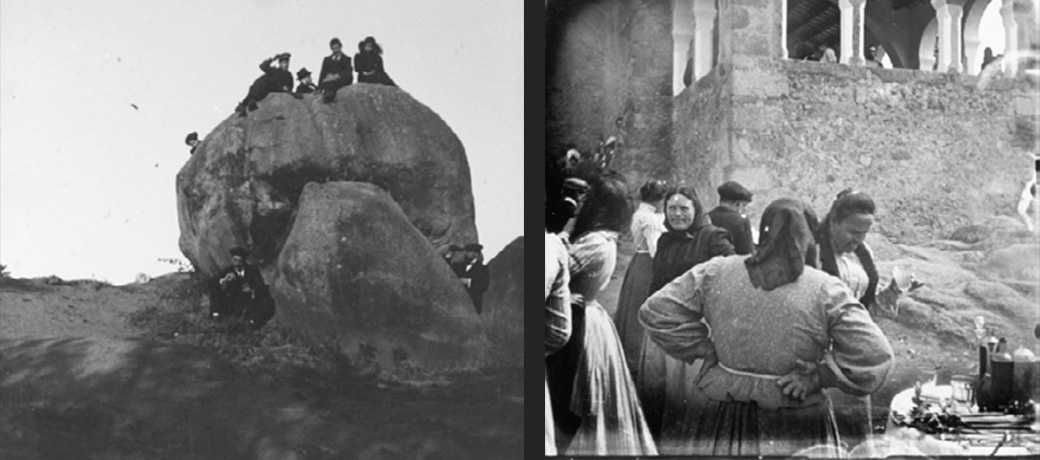
Going for a walk, summering, taking excursions and travelling
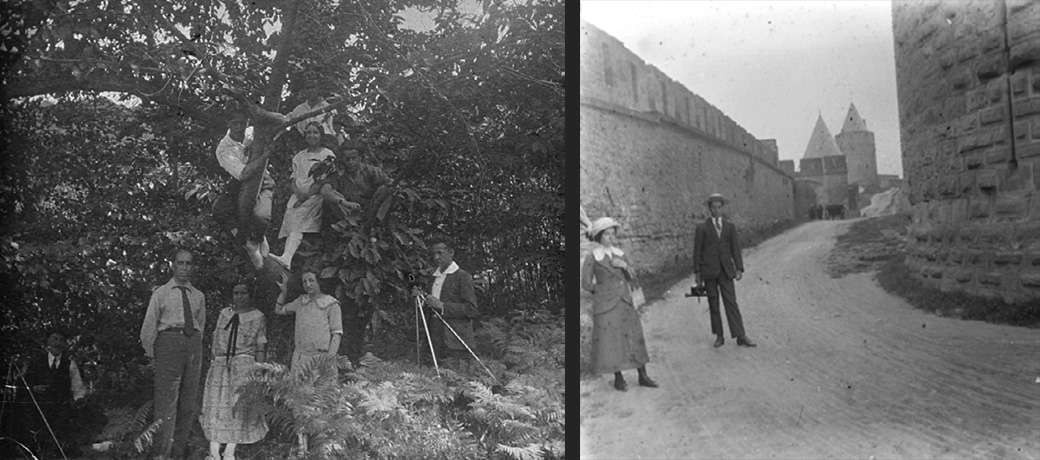
When rural landowners moved to the city, quickly adopted the urban lifestyles. In these pictures, we can see their interest for the urban world, for the signs of progress of their time. There was much more than travelling by car, they also used carioles, trains and boats depending on the trip, and summering, taking excursions and travelling were three related activities. Thus, they took excursions when they could not travel far but also while they summered or they travelled. And the Vilallongas took many excursions, especially around the surroundings of Santa Coloma de Farners and Mas Parés in Sant Martí Sapresa, their two main residences.
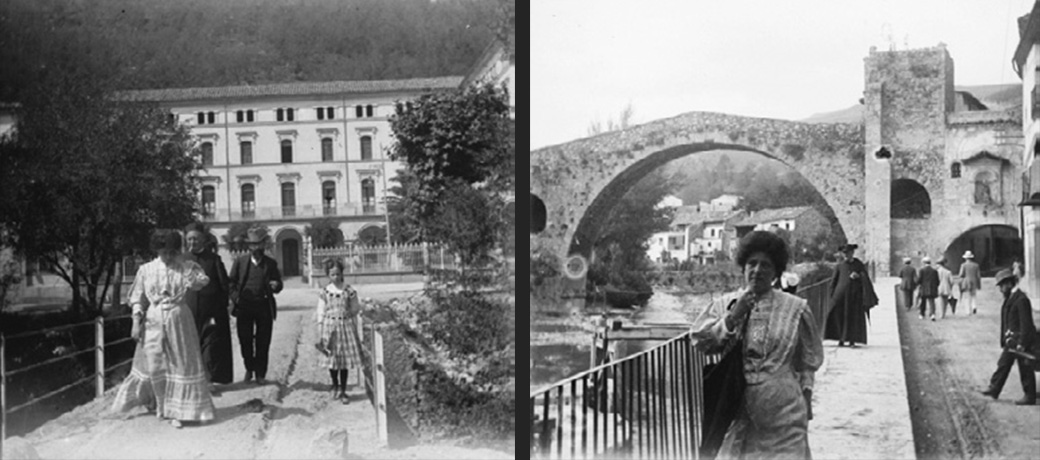
In a time when the concept of holidays did not exist as we know it these days, spending the summer in a vacation house, an inn, a hotel, a rented house or a spa where you could bathe was called summering and it was only at the reach of the well-off class. Summering was not only resting, playing, bathing or walking around the city, but also the moment to go walking around, have lunch or an afternoon snack in the nearby fountains, or go hiking in the mountain. The Vilallongas had stayed at the spa Montagut in Campelles, and probably visited the nearby villages of Sant Joan de les Abadesses, Ripoll and Camprodon, and a little bit further, the sanctuary of Núria. They had also rented a house in Blanes and had spent summers in Malgrat de Mar, Sant Feliu de Guíxols, Santa Cristina d’Aro and Cadaqués. Among the landowner families that lived in the city, it was common to spend part of the summer at the mas pairal, not only to have some rest, but to keep an eye on the farm or the forest in the most important moments, such as reaping time or cork tree peeling, among others. The Vilallonga family used to spend some weeks in Mas Parés. Despite the short distance following today’s standards, the distance between Santa Coloma de Farners and Sant Martí Sapresa was a quite respectable one at the time.
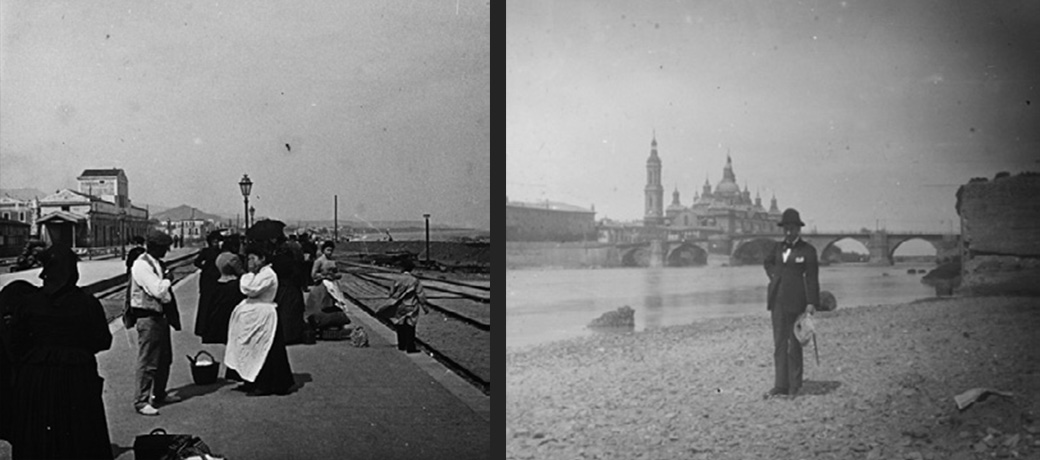
The Vilallongas travelled to Mataró, Barcelona, Manresa, Tarragona and Lleida. In Madrid, Zaragoza and San Sebastian, the city that Isabel the second popularised by summering there and converted it into a mostly appreciated destiny for nobles. Paris was the chosen city by Salvador de Vilallonga Oller and M.Dolors Rosell for their honeymoon. The Moulin Rouge vedettes shocked the morals of M.Dolors Rosell and they hurried back to Santa Coloma de Farners. They also visited Perpignan, Carcassonne, London and the mountain cirque of Gavarnie. Their interest for nature is present in the leisure time, the excursions and the trips of the Vilallonga family.
Religiousness
Their relationship with the Catholic church was close. It was common practice that priests and nuns spent summers in masos pairals and that landowners would maintain good relations with the Jesuits. And the Vilallonga family, as in the case of many landowners, had those connections. They used to spend summers at Mas Parés together with other brothers of the same order, and pictures of the Jesuits and the priests at the mas pairal of the family, its surroundings and in some walks and excursions are common.
Politics
The wall and the small watchtower that dominate the entrance to Mas Parés are a witness of both the vulnerability of the masos to the attacks of thieves and to military conflicts that left a mark in the country during the 19th century and the first third of the 20th, and in which the mas pairal of the Vilallongas is an important part. There is a picture of a Carlist group at Mas Parés and a document of the Third Carlist war (1872-1876) demanding some townhalls of la Selva to visit Mas Parés and pay an amount of money as a war tax. During the Civil War (1936-1939), Mas Parés was collectivised. The pictures of the monuments and the political institutions are also an example of that interest for politics.
Artists in the family
The participation of the well-off class in the cultural life of their towns, their habit of inviting artists to their summer houses, the musical education that their children were given, besides being a distinctive class sign, explain their interest for the culture and the presence of artists among their members. Josep de Vilallonga Corominas was a painter and, together with his brother Carles, painted two of the modernist posters that announced the first Christmas evening organized by Cercle in 1898. Another brother, Ferran, took part in poetry and zarzuela readings organised by the Cercle, and in a parody of the Floral Games, he won the Natural Flower for a poem in Catalan. We shall not forget Salvador de Vilallonga Oller, author of most of the pictures of the exhibition.
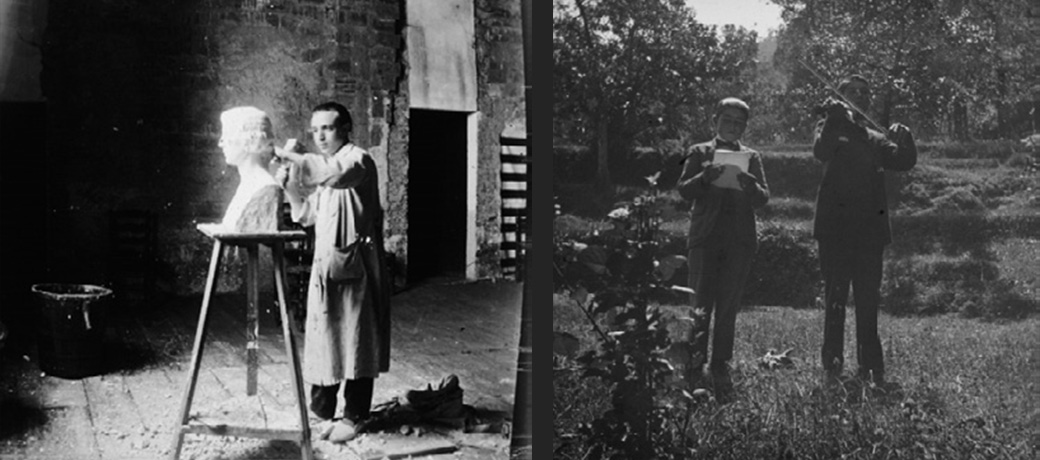
Apart from the most functional pictures, taken only to witness some event, an aesthetic refinement can be appreciated in many pictures, which reveals a person’s artistic interest for images and their composition, who searches, experiments and finds, through family pictures, events of many kinds or portraying the landscape. Salvador de Vilallonga was also a reading enthusiast and in the library at Mas Parés there is an early copy of L’hereu (1931), novel in which Prudenci Bertrana portrays the social life of an hereu around the ending of the 19th century and beginning of the 20th and describes scenes he had taken pictures of. He was also fond of theatre, cinema and painting, and he even invited the painter Joaquim Mir and the sculptor Lluís Montané to spend some days at Mas Parés. Thus, his son Jesús de Vilallonga, future painter and sculptor, got in touch with the world of art. And he, most probably, will not be the last connection of the Vilallongas with art.


