
Fernando
de Vilallonga
From Empuriabrava to Montjuïc
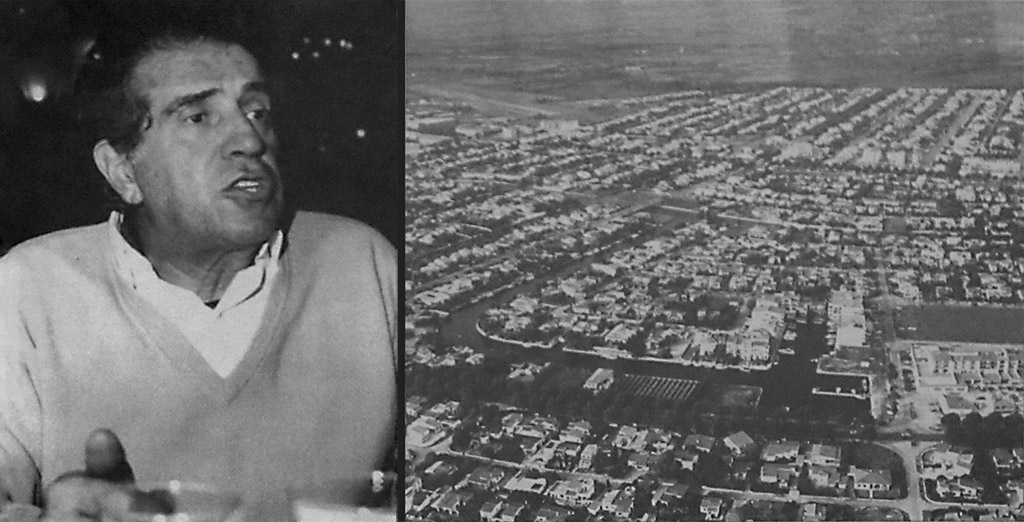
As businessman Fernando de Vilallonga passed away on the 11th, one of the most representative promoters of the housing boom of the 60s and 70s in the province of Girona has left us. Being the owner of 15 companies of widely different sectors, from entertainment to real estate, food, marble and chemical industry, Vilallonga will be remembered as one of the developers of Empuriabrava and the creator of the Montjuïc residential area.
From Empuriabrava to Montjuïc
Son of a Carlist landowner family from Santa Coloma de Farners, Nando Vilallonga inherited not only the fortune, but also the conservative and religious roots of the family. A religious man, courteous in his acts and words, he was able to swim and fish in the waters of Franco’s times, and managed to successfully build a corporation, which at the time of his death, aged 70, is made of fifteen different companies. Among them, we can find Aroparc SA (water park in Platja d'Aro), Graminsa Madrid and Piedra España Madrid (stone quarry exploitation), Mármoles Gerona SA, Quimiconsa (paints), Mineaquímica (detergents) and Aigües Faner (potable waters of Llançà). He was also the owner of Mas Parés (Duck by-products) Àngel del Bosc (farms), Foie del Vent Figueres and Bram Foie Gras Francia. Besides, he was also involved in estate management—Pirineu B— and real estate businesses: Ciudad Real Cotos de Ruidera SA, Grupo Ampurtán de Obras y Servicios, Nàutica Empuriabrava (company exploiting this Marina) and Urvisa, promoter of Montjuïc.
Married to Maria Rosa Ginjaume and father of five, Vilallonga climbed up positions in the business sector of Girona, together with another business heavyweight: his brother-in-law and partner Miquel Arpa. In 1964, when tourism money started falling onto the Spanish weakened economy, Vilallonga and Arpa, together with two more partners—German Moren i Lluís Canals—, created Eurobrava SA. This company, founded with an initial social capital of 23.5 million pesetas, which later on would end up investing more than 4,000 million pesetas to make Castello d'Empúries true, the pharaonic dream of Empuriabrava.
At first, the project of transforming the 600 hectare land owned by marquis of Sant Mori faced the opposition of Pere Coderch, the mayor at the time. The mayor required the promoters to build a road to Castelló, as he thought that without it the residents of the area would always go to Roses instead. This setback was sorted out as soon as Vilallonga and his partners used a common weapon at the time: contacts in high places. In October 1966, the governor Hellín Sol ordered the city hall to hold a plenary session with an only point in the agenda: discharging the mayor.
The substitute, Joan Casadevall, got along with the promoters and after a month of taking office, a partial version of Empuriabrava plan was approved. Thirty kilometres of navigable canals —built by a team of Galician stonecutters — 54 kilometres of streets, more than 10,000 plots —one of them was given out to Dalí— and the same number of berths show the magnitude of the work that transformed the area.
During this first quarter of a century of existence of Empuriabrava, the inhabitants of the so-called Catalan Venice, more than 75,000 in the summer, have gone through many different issues. Some of these issues were caused by initial shortcomings, such as a poor sewage system or the lack of sidewalks and slopes to drain rainwater, among others, caused by promoters out-of-control activity, which, according to the creators of Empuriabrava, distorted the original project. Those problems, actually, have been a constant source of conflicts and worries for the city hall.
Airfields and casinos
Nando Vilallonga’s interest for sport –he liked to go hunting, submarine fishing and he was a light aircraft pilot— led him to promote the Aeroclub Girona and to persuade his partners to build an airfield in Empúriabrava, which would be a good lure for the area. In order to obtain the necessary permits, Vilallonga met Salvador Benjumea, minister of governing, in Madrid, and showed him how stupid was the law forbidding airports less than 100 kilometres away from the border, meant to avoid foreign invasions.
However, Vilallonga did not succeed in the idea of building an airfield and a residential neighbourhood in Llagostera (the project was presented in 1979 and it is still under revision process), neither did he with the applications to open gambling casinos in the Yacht Club of Empuriabrava and in the Castell d’Empordà.
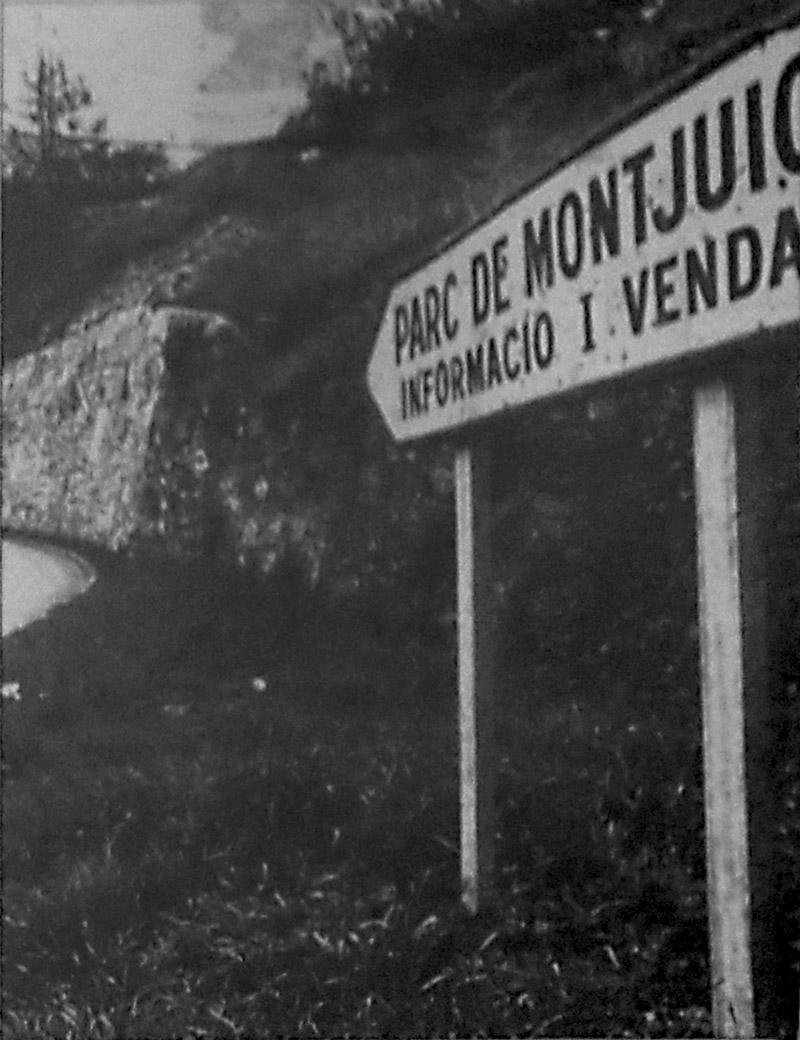
The other huge real estate operation of Nando Vilallonga was the parc de Montjuïc. In 1961, the city hall of Girona agreed to ask the IRS ministry to transfer the castle and its surroundings to its control, but surprisingly the request did not work and the 20 hectares were auctioned and got under the control of Urvisa, Vilallonga’s company. In 1967, nine more hectares were added thanks to the suspicious decision of the city hall, which made developable the area that was meant to be a green area according to the 1955 Plan General.
With all that land and other estates that were already of his own, the businessman was able to start thinking about pushing forward a residential area, which according to the slogans, it would allow you to “live two minutes away from the centre of Girona and breathe the same air as the angel of the cathedral”. Before that, though, he would have to get rid of the hundreds of people who lived in huts in the area of the castle, a problem which was solved unusually fast by the local authorities, who built social housing in other areas of the city. In 1971, the last hut was demolished and plots started being sold, but luck turned his back on Vilallonga with the arrival of democracy: the city hall forced him to transfer the land. Thus, his dream of transforming Montjuïc into an autonomous residential area vanished due to the refusal of the shopkeepers to open their shops in the big commercial building built by the real estate agency, which was not occupied by the courts either.
In the meantime, the ruins of the castle —now city property— were still on hold for an uncertain fate. In the 70s, Vilallonga proposed the Government to make a Parador Nacional there, but the refusal of the mayor Ribot, who was willing to have it in Les Àguiles, ended up with the city losing those hotel facilities.
Nando Vilallonga and El Punt
I met Nando Vilallonga during his years of Presència. He used to help us with the ads of his companies: soaps, marbles, and then, Empuriabrava. We had long conversations. Nando said he was Francoist, but he wasn’t. He liked the order, the safety, the respect for the private property and the peace imposed by the fascist dictatorship. I think he wasn’t more right-wing than Pla in his ideas; the value of the currency, the respect for the church and an inexpensive government. When they capitalized the company that would be publishing El Punt, they were aware that the autonomy and independence of the newspaper could only be granted if 50% of the capital was kept in the hands of the readers’ cooperative. Because of that, we made a huge effort to get members of 25,000 pesetas. But the other 50% had to be found as well, and it had to be founded by 100,000 pesetas shareholders. That second part, which looked easier, turned up being the most difficult one. When the newspaper was published, we almost had the 600 members of the cooperative needed. However, there were very few shareholders. I explained the project to Nando. He had had the intention to start a newspaper in Girona. He had even registered the name of Diari de Girona and had asked for a quote to a specialized company. He seemed surprised we could start the newspaper with only 30 millions, as his calculations and quote said 60 millions would be necessary. I told him our secret: we weren’t going to buy a rotary press (an original solution at the time, which everybody copied afterwards). Suddenly, he looked at me and said: —“If 30 millions are enough, we don’t need anybody else, you and I can make it”.
And when I let him know I did not have 15 millions, he told me: —No problem. I can put in mine and yours. He was being serious. It was a good chance, but I could not accept it. I had very clear in mind that a cooperative, besides granting the newspaper independence, would bring an immediate audience which would not be lost due to someone else’s interests. Then, he asked me how much should he put to join the project as it was. I suggested 500,000 pesetas, because more money could suggest he would be in control of it. He invested 500,000. He was the biggest shareholder of the newspaper, only Caixa Girona had invested more, if I’m not wrong. The other individual members got just one share per person. He even did more than that. He offered the brand name of Diari de Girona he had registered for free (interestingly, there was a duplicity with another record under the property of Manuel Bonmatí, who had also asked for a quote and became a member of El Punt). I couldn’t accept it either as we thought our newspaper was meant to be regional and couldn’t bare the name of the capital of the province. We also considered to recover the name of our rival newspaper as proposed by Vilallonga: L’Autonomista, which we had legally registered. It couldn’t happen because of Rahola’s opposition, and we respected her wishes. And yet, when we ran out of the money we had collected before start (about 17 millions) and the newspaper was in trouble to pay all the payrolls every month, Nando accepted to be part of the wheel of personal loans that La Caixa would give us.
—— Signing means paying... said Nando. But he signed. And he never had to pay, despite the bad omens.
All that, and even more stuff, has come to my mind when I’ve read the short obituary in El Punt. I’ve found out he was living in Llançà when he died. I think he might have left Girona, his great mansion in Montjuïc, a little bit worried, disappointed. Vilallonga loved his country, the city. He had done business as anybody else who could do them at the time. Some of them succeeded, some of them didn’t. He had earned money, but always working hard, trying to be the first. I’m sure many people never forgot him for being smarter than them. In time, he was judged more for his mistakes than for his wise moves. Envy is always unfair. I think the final balance is highly positive for the city and the country. I think someone had to say it. From El Punt, which he helped founding.
Let our friend Nando rest in peace.
 Download this article as PDF


